Gudi Padwa 2026 - New Year Celebrations
Gudi Padwa (गुढीपाडवा) 2026 - Marathi New Year Celebrations
Maharashtra Mandal Krakow celebrated Gudi Padwa, the Marathi New Year, with traditional zeal and enthusiasm on March 30, 2026. The event brought together the community to mark the beginning of the spring season with rituals, cultural programs, and a festive feast.
Celebration Highlights
The celebration was a day-long event filled with cultural richness and community bonding:
- Traditional Rituals: The day began with the traditional hoisting of the Gudi and puja, symbolising victory and prosperity.
- Cultural Performances: The program featured a variety of performances, including vocal songs by Ojasvi, Riddhim, Ishwari, Rudransh, and Kaki.
- Community Activities: Children performed a dance and a Bal-Natya (theatrical performance), while the Natyalaya group and MMK girls showcased vibrant group dances.
- Special Moments: The event marked the official launch of the MMK website and included a cooking competition that showcased the culinary talents of our community.
- Traditional Feast: Participants enjoyed a traditional Maharashtrian lunch, featuring delicacies like Shrikhand-Puri and Puran Poli.
Photo Gallery
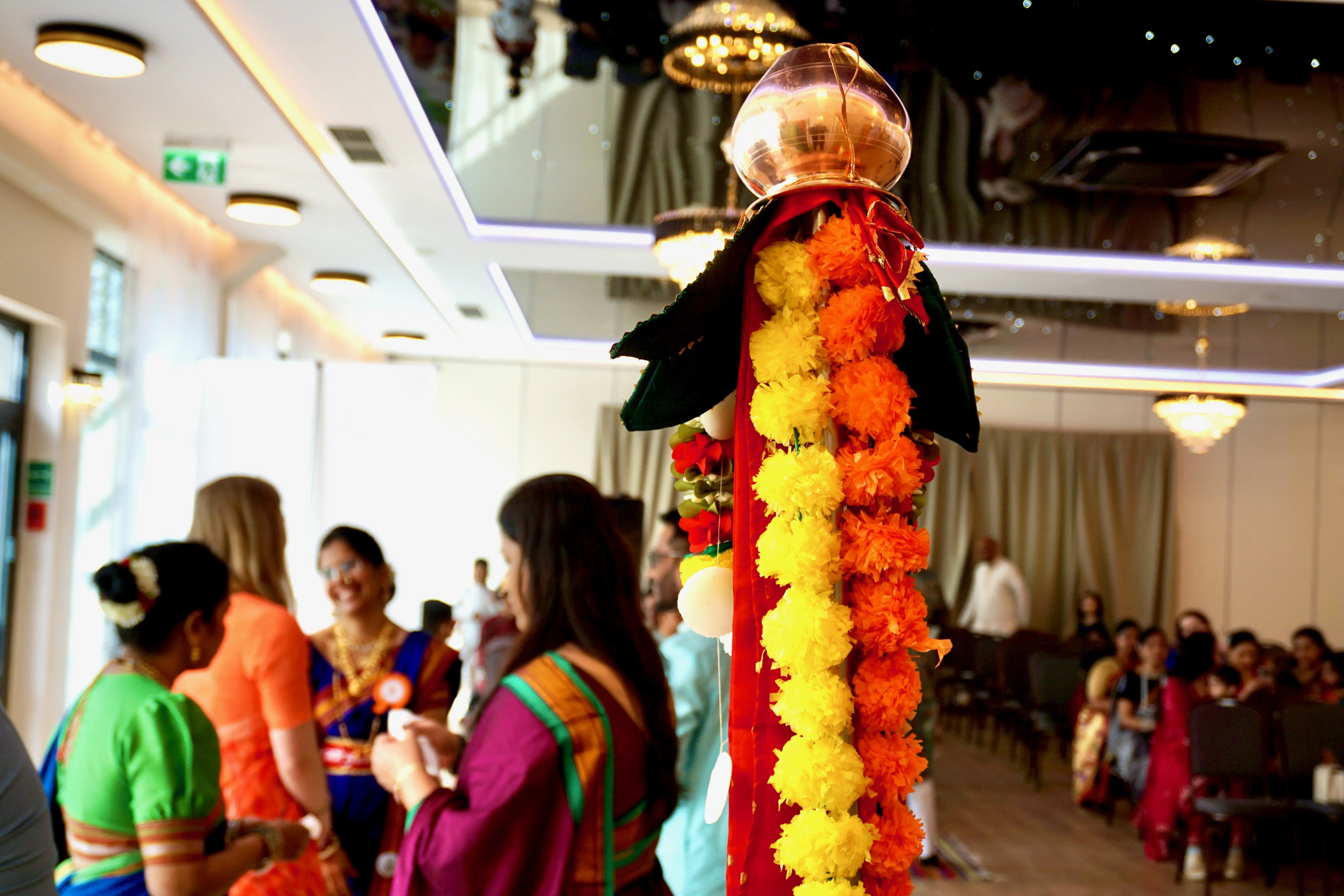
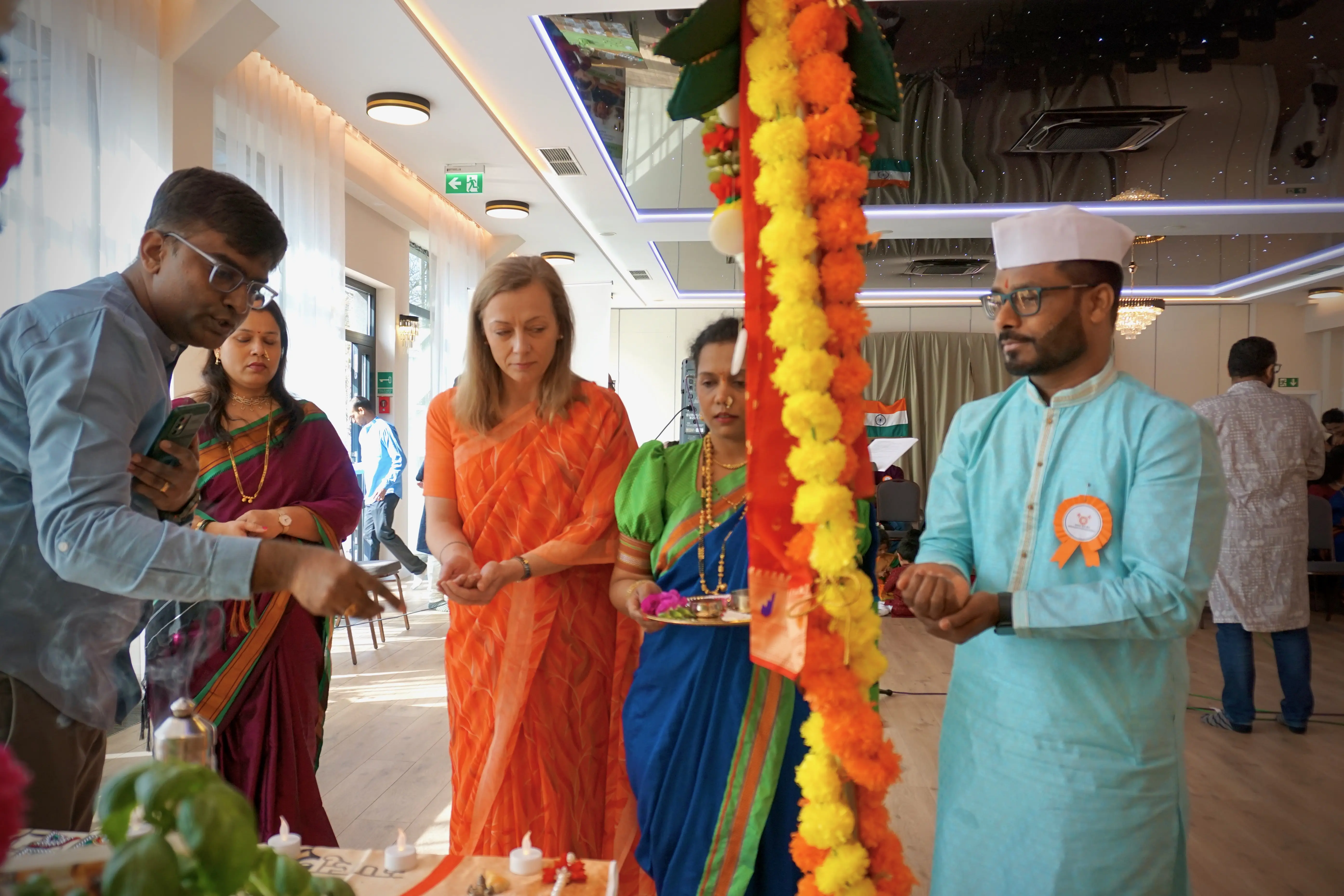 Gudi Padwa community celebration in Krakow
Traditional Significance
Gudi Padwa (गुढीपाडवा) marks the first day of the Chaitra month in the Hindu lunisolar calendar and is celebrated as the Marathi New Year. It heralds the arrival of spring and the beginning of the new harvest season.
The Gudi — Symbol of Victory 🚩
The centrepiece of the celebration is the Gudi — a bright green or yellow silk cloth adorned with brocade (zari) tied to the tip of a long bamboo stick, topped with a garland of sugar crystals (sakhar gathi), neem leaves, a twig of mango leaves, and a copper or silver pot (kalash) placed upside down. The Gudi is hoisted outside homes and is visible from afar, symbolising victory, prosperity, and the welcoming of good fortune.
Mythological Origins
According to tradition, Gudi Padwa commemorates several auspicious events:
- Lord Brahma's creation — It is believed that Lord Brahma created the universe on this day, making it the very first day of the Hindu calendar.
- Lord Rama's homecoming — The festival is also associated with Lord Rama's triumphant return to Ayodhya after defeating Ravana. The people of Ayodhya hoisted Gudis to celebrate his victory.
- Shaka Calendar — The Shalivahana Shaka era, the national calendar of India, begins on this day.
Festive Traditions
- Neem & Jaggery — A paste of neem leaves and jaggery (gul) is eaten to signify the sweet and bitter experiences of life.
- Traditional Feast — Families prepare Shrikhand-Puri, Puran Poli, Aamras, and other Maharashtrian delicacies.
- Rangoli & Toran — Homes are decorated with colourful rangolis and fresh mango-leaf torans at the entrance.
Looking Forward
We look forward to celebrating many more Gudi Padwas with our community. Thank you to all who participated and made the event a success!
गुढीपाडव्याच्या हार्दिक शुभेच्छा! 🚩